Introduction
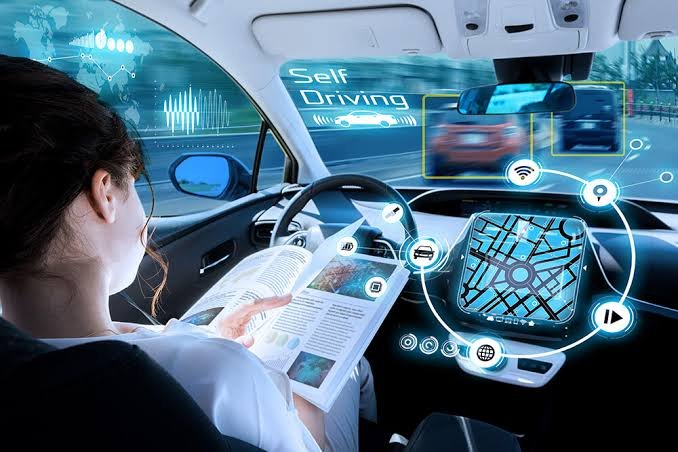
Self-driving cars are one of the most exciting developments in modern transportation technology. For decades, people have imagined vehicles that could drive themselves without requiring a human to control the steering wheel, accelerator, or brakes. Today, that idea is becoming increasingly realistic as advances in artificial intelligence, machine learning, computer vision, sensors, robotics, connectivity, and high-performance computing continue to transform the automotive industry.
The future of self-driving cars could change the way people travel, work, live, and interact with cities. Autonomous vehicles may eventually make transportation safer, more convenient, and more accessible. They could reduce some types of traffic accidents, improve transportation efficiency, provide mobility to people who cannot drive, and create new opportunities for businesses.
However, the development of autonomous vehicles also presents major challenges. Technology must become highly reliable, governments must establish appropriate regulations, manufacturers must address cybersecurity and privacy concerns, and society must decide how humans and autonomous systems should share responsibility on the road.
Self-driving cars are therefore not simply a new type of vehicle. They represent a broader transformation in transportation technology.
This article explores the future of self-driving cars, how autonomous driving works, the technologies behind it, potential benefits, major challenges, industry applications, safety considerations, and what transportation could look like in the coming years.
What Are Self-Driving Cars?
Self-driving cars, also called autonomous vehicles or autonomous cars, are vehicles designed to perform some or all driving tasks with limited or no human intervention.
Traditional vehicles depend almost entirely on human drivers. A driver observes the road, identifies traffic signs, predicts the actions of other road users, decides what to do, and controls the vehicle.
A self-driving vehicle attempts to perform many of these tasks using computers, sensors, cameras, artificial intelligence, and automated control systems.
The goal is to allow a vehicle to understand its surroundings and make appropriate driving decisions.
Depending on the level of automation, an autonomous vehicle may be able to:
- Maintain its lane
- Adjust speed
- Detect other vehicles
- Recognize pedestrians
- Identify traffic signs
- Change lanes
- Park automatically
- Follow navigation routes
- Respond to certain road conditions
- Drive without continuous human control in specific environments
It is important to understand that not every vehicle marketed with advanced driver assistance features is fully self-driving. Many modern vehicles can automate individual driving functions while still requiring a human driver to remain responsible for the vehicle.
Levels of Vehicle Automation
The future of autonomous driving is often explained using different levels of vehicle automation.
Level 0: No Driving Automation
At Level 0, the driver performs all driving tasks. A vehicle may still provide warnings or emergency assistance, but it does not continuously control driving.
Examples may include:
- Lane departure warnings
- Collision warnings
- Blind-spot alerts
Level 1: Driver Assistance
Level 1 vehicles can assist with one major aspect of driving, such as steering or acceleration and braking.
The human driver remains responsible for driving.
Level 2: Partial Driving Automation
Level 2 systems can control steering and acceleration or braking simultaneously under certain conditions.
However, the driver must remain attentive and ready to take control.
Many advanced driver assistance systems available today fall into this category.
Level 3: Conditional Automation
At Level 3, the vehicle can perform driving tasks under specific conditions.
The system may allow the driver to temporarily stop actively controlling the vehicle, but the driver may still need to respond when the system requests assistance.
Level 4: High Automation
Level 4 vehicles can perform driving tasks without human intervention within defined operating conditions.
For example, a Level 4 autonomous vehicle may operate within a specific geographic area or under particular weather and road conditions.
Level 5: Full Automation
Level 5 represents the highest level of vehicle automation.
A Level 5 vehicle would theoretically be capable of driving without human control under all normal road and environmental conditions where a human driver could operate.
There would be no need for traditional driver controls in the vehicle’s intended operation.
How Self-Driving Cars Work
Self-driving cars depend on a combination of technologies working together.
A single sensor cannot provide everything an autonomous vehicle needs. Instead, vehicles use multiple systems to build an understanding of their environment.
These technologies can include cameras, radar, lidar, GPS, mapping systems, artificial intelligence, machine learning, and vehicle-control computers.
The basic process can be understood in several stages.
1. Sensing the Environment
The vehicle first needs to understand what is happening around it.
Sensors collect information about:
- Vehicles
- Pedestrians
- Cyclists
- Traffic signals
- Road markings
- Buildings
- Obstacles
- Road conditions
- Distance from surrounding objects
2. Perception
The vehicle’s computer analyzes sensor information to identify objects and understand the environment.
For example, the system may determine that a particular object is a pedestrian crossing the road.
3. Prediction
The vehicle must then predict what nearby objects might do.
For example, if a pedestrian is standing near a crosswalk, the system may estimate whether that person is likely to enter the road.
4. Planning
The autonomous driving system decides what the vehicle should do next.
Possible decisions include:
- Continue driving
- Slow down
- Stop
- Change lanes
- Turn
- Avoid an obstacle
5. Vehicle Control
Finally, the system sends commands to the vehicle.
The vehicle can automatically control:
- Steering
- Braking
- Acceleration
- Gear selection
This entire process happens continuously while the vehicle is moving.
Artificial Intelligence and Autonomous Vehicles
Artificial intelligence is one of the most important technologies behind self-driving cars.
AI allows vehicles to process huge amounts of information and recognize patterns.
Machine learning systems can be trained using large datasets containing examples of driving situations.
For example, AI systems can learn to recognize:
- Cars
- Trucks
- Motorcycles
- Pedestrians
- Traffic lights
- Road signs
- Lane markings
- Different road environments
The more advanced these systems become, the better autonomous vehicles may become at understanding complicated traffic situations.
However, AI must also be extremely reliable because mistakes on the road can have serious consequences.
The Role of Computer Vision
Computer vision allows autonomous vehicles to interpret visual information.
Cameras installed around a vehicle can capture images of the surrounding environment.
Computer vision software can analyze these images to identify important objects and features.
For example, a vehicle may use cameras to recognize:
- A red traffic light
- A pedestrian
- A bicycle
- A road sign
- Lane markings
- Construction barriers
Future computer vision systems are expected to become more capable as AI models improve.
Lidar Technology
Lidar is another important technology used in autonomous driving.
Lidar uses laser pulses to measure distances between the vehicle and surrounding objects.
This can help create a three-dimensional representation of the vehicle’s surroundings.
Lidar can be useful for identifying:
- Road boundaries
- Vehicles
- Pedestrians
- Buildings
- Obstacles
One challenge is that lidar systems can increase vehicle cost and may face limitations in certain environmental conditions.
Nevertheless, lidar remains an important technology in autonomous vehicle research and development.
Radar Technology
Radar uses radio waves to detect objects and measure distance and relative movement.
Radar can be particularly useful for determining the speed and position of nearby vehicles.
It can also provide useful information in conditions where cameras may have difficulty.
Future autonomous vehicles may continue using radar together with cameras and other sensors.
GPS and High-Definition Maps
Navigation is another important part of autonomous driving.
GPS can help determine the vehicle’s approximate location.
Advanced mapping systems can provide detailed information about roads, intersections, lanes, and other geographic features.
Autonomous vehicles may combine GPS, maps, sensors, and real-time environmental information to determine their location and plan routes.
However, relying entirely on maps is not enough because roads change constantly.
Construction, accidents, temporary road closures, weather, and other events can change the driving environment.
Therefore, future vehicles will need to combine mapping with real-time perception.
Vehicle-to-Everything Communication
Another promising technology is vehicle-to-everything communication, commonly known as V2X.
This technology can allow vehicles to exchange information with other vehicles, infrastructure, and communication systems.
For example, a vehicle could potentially receive information about:
- Traffic conditions
- Road hazards
- Traffic signals
- Accidents
- Construction zones
- Emergency vehicles
Connected transportation systems could improve the overall efficiency of future roads.
Benefits of Self-Driving Cars
Autonomous vehicles could provide many potential benefits.
Improved Road Safety
One of the biggest potential advantages of self-driving technology is improved safety.
Human drivers can become distracted, tired, stressed, or confused.
Autonomous systems do not experience human fatigue in the same way.
If autonomous driving technology becomes sufficiently reliable, it could potentially reduce accidents caused by certain forms of human error.
However, this depends on the reliability of the technology and how autonomous systems perform in complex real-world situations.
Reduced Driver Fatigue
Long-distance driving can be tiring.
In highly automated vehicles, passengers may eventually be able to spend travel time working, studying, reading, or relaxing instead of continuously controlling the vehicle.
This could significantly change the experience of long journeys.
Increased Mobility
Self-driving vehicles could provide new transportation opportunities for people who cannot drive themselves.
Potential users could include:
- Elderly people
- People with certain disabilities
- People without access to private transportation
Autonomous transportation services could potentially make mobility more accessible.
Better Traffic Management
Autonomous vehicles could communicate with transportation networks and other vehicles.
If vehicles travel more efficiently, traffic flow could potentially improve.
Vehicles might also maintain more consistent distances and speeds, reducing unnecessary braking and acceleration.
Improved Transportation Efficiency
Autonomous vehicles could optimize routes based on traffic conditions.
Artificial intelligence could continuously analyze available information and recommend efficient routes.
This may reduce unnecessary travel time and energy consumption.
Self-Driving Cars and Public Transportation
Autonomous technology may also transform public transportation.
Self-driving buses, shuttles, and taxis could operate along predefined routes.
Small autonomous shuttles could provide transportation between:
- Train stations
- Airports
- Shopping centers
- Universities
- Business districts
- Residential areas
Instead of replacing public transportation, autonomous technology could become an additional component of transportation networks.
Autonomous Ride-Sharing
Ride-sharing could be one of the most important applications of self-driving vehicles.
A future ride-sharing service could use autonomous vehicles that operate without a human driver.
Passengers could request transportation through an application.
The system could automatically assign a vehicle, calculate the route, and transport the passenger to the destination.
If autonomous ride-sharing becomes economically practical, it could change the traditional business model of taxis and transportation services.
The Future of Autonomous Trucks
Self-driving technology is not limited to passenger cars.
Autonomous trucks could have a major impact on logistics and supply chains.
Long-distance trucking can involve long hours on highways.
Autonomous systems may eventually help trucks perform highway driving while humans handle other responsibilities.
Potential benefits include:
- Improved logistics efficiency
- More consistent travel schedules
- Reduced driver fatigue
- Lower transportation costs in some applications
However, autonomous trucking also raises important questions about employment, safety, regulation, and human oversight.
Self-Driving Cars and Smart Cities
The future of autonomous vehicles is closely connected to the development of smart cities.
Smart cities use digital technologies to improve transportation, energy management, public services, and infrastructure.
Autonomous vehicles could communicate with:
- Traffic lights
- Parking systems
- Road sensors
- Transportation management centers
- Other connected vehicles
This could create a more integrated transportation network.
Changes to Parking
Self-driving vehicles could change how parking works.
A vehicle might drop a passenger at a destination and then travel to a remote parking location.
When the passenger is ready to leave, the vehicle could return automatically.
This could reduce the need for large parking areas in some locations.
Future parking facilities may also become more automated.
Autonomous Cars and Fuel Efficiency
Self-driving technology could potentially improve energy efficiency.
Autonomous systems can make smoother acceleration and braking decisions.
They may also select efficient routes and maintain appropriate speeds.
Electric autonomous vehicles could combine these advantages with electric propulsion.
This combination may become an important part of future transportation.
Self-Driving Cars and Electric Vehicles
Electric vehicles and autonomous vehicles are separate technologies, but they may increasingly work together.
Electric vehicles already use sophisticated electronic systems, sensors, computers, and software.
Autonomous driving requires many of the same types of electronic and computing capabilities.
Future vehicles may therefore combine:
- Electric power
- Autonomous driving
- Connected communication
- Advanced AI
- Smart navigation
This could create a new generation of highly automated transportation.
Challenges Facing Self-Driving Cars
Despite rapid technological progress, self-driving cars face major challenges.
Difficult Driving Conditions
Roads can be unpredictable.
Autonomous vehicles may need to handle:
- Heavy rain
- Fog
- Snow
- Poor visibility
- Flooding
- Construction zones
- Damaged roads
- Unusual traffic patterns
A system that performs well under normal conditions must also be able to respond safely to unusual situations.
Human Behavior
Human drivers do not always follow traffic rules.
Pedestrians and cyclists can also behave unpredictably.
An autonomous vehicle must anticipate these behaviors and make safe decisions.
This is one of the most difficult problems in autonomous driving.
Cybersecurity
Connected autonomous vehicles could become targets for cyberattacks.
Because vehicles depend heavily on software and communication networks, cybersecurity will be extremely important.
Manufacturers will need to protect:
- Vehicle software
- Communication systems
- User information
- Navigation systems
- Connected services
Future vehicles will require strong cybersecurity protections and regular software updates.
Privacy
Autonomous vehicles could collect significant amounts of information.
This might include location data, travel patterns, vehicle information, and other data.
Companies and governments will need to establish responsible policies for collecting, storing, and using this information.
Cost
Advanced sensors, computing systems, software, and testing can be expensive.
As technology improves and production scales increase, costs may decrease.
However, highly advanced autonomous vehicles could remain expensive for some time.
Legal and Regulatory Issues
Governments need clear rules for autonomous vehicles.
Important questions include:
- Who is responsible after an accident?
- How should autonomous vehicles be tested?
- What safety standards should they meet?
- What data should vehicles collect?
- How should manufacturers be held accountable?
Different countries and regions may develop different regulations.
The Role of Government
Governments will play an important role in the future of autonomous vehicles.
They may establish regulations covering:
- Vehicle testing
- Safety standards
- Driver responsibilities
- Insurance
- Cybersecurity
- Data privacy
- Vehicle certification
- Road infrastructure
Government agencies will also need to work with technology companies, automakers, researchers, and transportation organizations.
The Economic Impact of Self-Driving Cars
Autonomous vehicles could have a significant economic impact.
New industries may develop around:
- Autonomous vehicle software
- Sensors
- AI systems
- Mapping
- Cybersecurity
- Vehicle maintenance
- Fleet management
- Autonomous transportation services
At the same time, some traditional jobs could be affected.
Driving-related professions may experience changes as automation becomes more capable.
The economic transition could therefore be complex.
How Self-Driving Cars Could Change Daily Life
Imagine a future where a car can arrive at your home automatically.
You enter the vehicle, select your destination, and the vehicle handles the journey.
During the trip, you could potentially:
- Read
- Study
- Work
- Watch educational content
- Talk with family
- Relax
Travel time could become more productive.
This could be particularly valuable for people who spend significant amounts of time commuting.
The Future of Car Ownership
Autonomous vehicles could also change people’s relationship with car ownership.
If autonomous ride-sharing becomes affordable and widely available, some people may decide that owning a private vehicle is unnecessary.
Instead, transportation could become a service.
People might subscribe to mobility services rather than purchasing and maintaining a personal car.
However, private car ownership is likely to remain important in many areas, especially where public transportation options are limited.
Autonomous Vehicles in Rural Areas
Autonomous transportation may eventually benefit rural communities.
In areas where public transportation is limited, autonomous shuttles could provide transportation between communities and essential services.
Possible applications include transportation to:
- Hospitals
- Schools
- Shopping areas
- Train stations
- Employment centers
However, rural roads can present unique challenges because of limited infrastructure, poor road markings, and changing weather conditions.
Autonomous Vehicles in Developing Countries
Developing countries may face different challenges and opportunities.
Some regions have rapidly growing cities and transportation systems.
Autonomous vehicles could potentially help improve transportation efficiency, but successful deployment would require suitable roads, reliable digital infrastructure, strong regulations, and affordable technology.
Local transportation needs will determine how quickly autonomous technology becomes practical.
The Importance of Human Oversight
Even as vehicles become more automated, human oversight may remain important for many years.
Some systems may require drivers to take control in specific situations.
Other autonomous fleets may use remote support centers to monitor vehicles and assist when unusual situations occur.
The exact balance between human control and automation will depend on technology, regulations, and operating conditions.
Software Updates and Autonomous Cars
Modern vehicles increasingly depend on software.
Future autonomous vehicles may receive regular software updates that improve:
- Performance
- Safety
- Navigation
- Cybersecurity
- Sensor processing
- User features
This means vehicles may continue evolving after they are purchased.
However, software updates must be carefully tested because mistakes could potentially affect vehicle safety.
The Importance of Testing
Before autonomous vehicles can operate widely, extensive testing is required.
Testing may take place in:
- Simulation environments
- Closed test tracks
- Controlled urban areas
- Public roads
Simulation can help developers create millions of driving scenarios.
Real-world testing is also important because not every situation can be perfectly predicted.
Autonomous Vehicles and Artificial Intelligence Development
As AI systems become more sophisticated, autonomous driving could become more capable.
Future AI systems may better understand complex environments and predict the behavior of road users.
However, improved AI does not eliminate the need for rigorous testing.
Autonomous driving requires not only intelligence but also reliability, predictability, safety, and appropriate fail-safe mechanisms.
The Future of Autonomous Vehicle Design
Vehicle interiors may change as driving becomes more automated.
If passengers no longer need to focus continuously on driving, manufacturers could rethink the interior layout.
Future vehicles may include:
- More flexible seating
- Larger displays
- Improved entertainment systems
- Work areas
- Better connectivity
- Personalized passenger experiences
The car could become more like a mobile living or working space.
Autonomous Delivery Vehicles
Self-driving technology could also transform package delivery.
Small autonomous vehicles may eventually transport packages over short distances.
Companies could use autonomous systems for:
- Grocery delivery
- Package transportation
- Restaurant delivery
- Warehouse logistics
This could reduce the need for human drivers in certain delivery operations.
Autonomous Vehicles and Emergency Services
Autonomous technology could eventually support emergency services.
Potential applications include:
- Emergency medical transportation
- Automated supply delivery
- Disaster-response vehicles
- Fire-service support systems
However, emergency environments are particularly complex, so these applications would require extremely reliable technology.
The Future of Autonomous Vehicle Manufacturing
Vehicle manufacturers are increasingly becoming software-focused companies.
Traditional automotive engineering remains important, but modern vehicles also require expertise in:
- Artificial intelligence
- Software development
- Data science
- Cybersecurity
- Robotics
- Cloud computing
- Sensor technology
This shift could change the skills required throughout the automotive industry.
Cloud Computing and Self-Driving Cars
Cloud computing can support autonomous transportation by providing infrastructure for data processing, fleet management, software development, and analytics.
Vehicles may process much information locally, but cloud systems can support broader services.
For example, fleet operators could use cloud platforms to monitor large numbers of vehicles.
Edge Computing in Autonomous Vehicles
Edge computing is particularly important because autonomous vehicles often need extremely fast responses.
Instead of sending every piece of information to a distant server, vehicles can process critical information locally.
This reduces dependence on network communication for time-sensitive decisions.
A combination of edge computing and cloud computing may therefore support future autonomous transportation systems.
5G and Connected Vehicles
High-speed mobile networks may support communication between vehicles, infrastructure, and cloud services.
Potential applications include:
- Traffic information
- Fleet coordination
- Software updates
- Road hazard alerts
- Connected transportation services
However, autonomous vehicles should remain capable of handling essential driving tasks even when network connectivity is unavailable.
Autonomous Cars and Insurance
Insurance could also change as autonomous vehicles become more common.
Traditional car insurance is often closely connected to driver behavior.
If automated systems perform most driving tasks, insurers may need to consider:
- Vehicle software
- Manufacturer responsibility
- System reliability
- Cybersecurity
- Vehicle maintenance
Insurance models may therefore evolve alongside autonomous driving technology.
Environmental Considerations
Autonomous vehicles could have positive or negative environmental effects depending on how they are used.
Potential benefits include:
- Smoother driving
- Efficient routing
- Reduced congestion in certain conditions
- Better fleet utilization
- Integration with electric vehicles
However, if autonomous transportation makes travel significantly easier and cheaper, people could potentially travel more.
The environmental impact will therefore depend on how autonomous vehicles are integrated into broader transportation systems.
The Future of Roads
Road infrastructure may also change.
Smart roads could include:
- Digital traffic signals
- Road sensors
- Connected signs
- Vehicle communication systems
- Real-time traffic monitoring
Such infrastructure could help autonomous vehicles operate more effectively.
However, autonomous vehicles will ideally need to remain capable of operating on ordinary roads rather than depending entirely on specialized infrastructure.
Public Acceptance of Self-Driving Cars
Technology alone cannot determine the future of autonomous vehicles.
People must also trust the technology.
Public acceptance may depend on:
- Safety records
- Transparency
- Reliability
- Affordability
- Ease of use
- Government regulation
If people do not trust autonomous vehicles, adoption could remain slow even if the technology becomes technically capable.
Education and Public Awareness
People will need to understand what autonomous driving systems can and cannot do.
Drivers should know the limitations of driver-assistance technologies.
Manufacturers and regulators can help by providing clear information about system capabilities and responsibilities.
Public education may become increasingly important as automation levels increase.
What Will Self-Driving Cars Look Like in the Future?
Future autonomous cars may look similar to today’s vehicles at first.
The biggest changes may occur inside the vehicle and within its software.
As automation increases, vehicles could become:
- More connected
- More intelligent
- More personalized
- More electric
- More software-driven
- More automated
The traditional concept of a car may gradually evolve into a connected mobility platform.
Timeline for the Future of Self-Driving Cars
The development of autonomous vehicles will likely happen gradually rather than all at once.
In the near term, advanced driver assistance systems may become increasingly common.
More vehicles could offer automated parking, highway assistance, adaptive cruise control, lane-centering systems, and other features.
Over time, highly automated services may expand in controlled environments.
Longer-term developments could include broader autonomous transportation networks.
However, the exact timeline is difficult to predict because it depends on technology, regulation, cost, infrastructure, safety performance, and public acceptance.
Why Full Autonomy Is Difficult
Driving may appear simple to humans, but it is an extremely complicated activity.
A human driver continuously processes many signals:
- Road conditions
- Weather
- Traffic behavior
- Pedestrian movement
- Vehicle movement
- Traffic rules
- Social cues
Humans can also use common sense when encountering unusual situations.
Teaching machines to handle every possible situation is a major technological challenge.
This is why fully autonomous driving is much more difficult than simply making a vehicle steer itself.
The Future of Autonomous Driving Software
Autonomous driving software will likely continue becoming more sophisticated.
Future systems may use increasingly advanced AI models to understand driving environments.
Developers may also improve systems through simulation, real-world data, and controlled testing.
Software architecture will need to prioritize safety and reliability.
A successful autonomous vehicle system must not only make good decisions but also behave predictably when something goes wrong.
Safety as the Most Important Priority
The future of autonomous vehicles ultimately depends on safety.
A self-driving system should be designed to minimize risk and respond appropriately when unexpected situations occur.
Important safety features may include:
- Redundant sensors
- Backup computing systems
- Emergency braking
- Fault detection
- Safe-stop procedures
- Cybersecurity protection
- Continuous system monitoring
The goal should be to ensure that failures do not automatically result in dangerous situations.
The Social Impact of Autonomous Vehicles
Autonomous transportation could change society in many ways.
People may have greater mobility and transportation choices.
Cities could redesign streets and parking areas.
Businesses could develop new services.
Commuting patterns could change.
At the same time, automation could affect employment and require workers to develop new skills.
The social impact will therefore extend far beyond the automotive industry.
The Future of Transportation
Self-driving cars are part of a larger transformation in transportation.
Future mobility may combine:
- Autonomous vehicles
- Electric vehicles
- Public transportation
- Ride-sharing
- Smart infrastructure
- Artificial intelligence
- Connected devices
- Renewable energy
Instead of thinking about autonomous cars as isolated products, it is useful to view them as components of a connected transportation ecosystem.
Frequently Asked Questions About Self-Driving Cars
What are self-driving cars?
Self-driving cars are vehicles that use technologies such as sensors, cameras, artificial intelligence, and automated control systems to perform some or potentially all driving tasks.
Are self-driving cars completely autonomous today?
Not all vehicles described as self-driving are fully autonomous. Many current systems provide driver assistance and require human supervision.
How do autonomous cars see the road?
Autonomous vehicles can use cameras, radar, lidar, GPS, maps, and other sensors to understand their surroundings.
Can self-driving cars reduce accidents?
Autonomous vehicles have the potential to reduce some accidents associated with human error, but their safety depends on the reliability and limitations of the technology.
Will self-driving cars replace human drivers?
The impact on human driving jobs is uncertain. Automation may reduce the need for human drivers in some applications while creating new jobs in technology, maintenance, fleet management, and other fields.
Will self-driving cars be electric?
Not necessarily, but electric vehicles and autonomous driving technology may increasingly be combined because modern electric vehicles already rely heavily on electronic and software systems.
Are autonomous cars safe?
Safety varies by system and operating conditions. Autonomous driving technology requires extensive testing, monitoring, regulation, and continuous improvement.
When will fully self-driving cars become common?
There is no universally reliable date for widespread full autonomy. Adoption will depend on technology, safety, regulations, infrastructure, cost, and public acceptance.
Conclusion
The future of self-driving cars could fundamentally transform transportation. Advances in artificial intelligence, machine learning, computer vision, lidar, radar, GPS, connectivity, edge computing, and vehicle software are making increasingly sophisticated automated driving systems possible.
Autonomous vehicles could offer major benefits, including improved mobility, potentially safer transportation, more efficient logistics, reduced driver fatigue, and new transportation services. They could also transform public transportation, delivery systems, parking, urban planning, and vehicle ownership.
At the same time, significant challenges remain. Autonomous vehicles must operate safely in unpredictable environments, protect against cybersecurity threats, respect privacy, meet regulatory requirements, and gain public trust. The technology must also become economically practical before widespread adoption becomes realistic.
The most likely future is not one in which every vehicle suddenly becomes fully autonomous. Instead, transportation will probably become increasingly automated over time. Driver assistance systems may become more capable, autonomous services may expand in carefully defined environments, and connected transportation networks may gradually develop.
Ultimately, self-driving cars are not simply about removing the driver from the driver’s seat. They are part of a much larger technological shift toward intelligent, connected, and automated transportation.
As technology continues to advance, autonomous vehicles could become an important part of how people and goods move around the world. The future of transportation will depend not only on what engineers can build, but also on how safely, responsibly, and thoughtfully society chooses to use these technologies.
SEO Keywords
Self-driving cars, autonomous vehicles, future of self-driving cars, autonomous driving technology, self-driving car technology, future of autonomous vehicles, AI self-driving cars, autonomous vehicle technology, driverless cars, future transportation technology, electric autonomous vehicles, smart transportation, autonomous cars benefits, autonomous driving future, self-driving vehicle technology.
Suggested SEO Title
The Future of Self-Driving Cars: Autonomous Vehicle Technology Explained
Suggested Meta Description
Explore the future of self-driving cars, including autonomous vehicle technology, AI, sensors, safety, benefits, challenges, smart cities, and the future of transportation.
Suggested URL Slug
/future-of-self-driving-cars/
Suggested H1
The Future of Self-Driving Cars: How Autonomous Vehicle Technology Will Change Transportation