Introduction
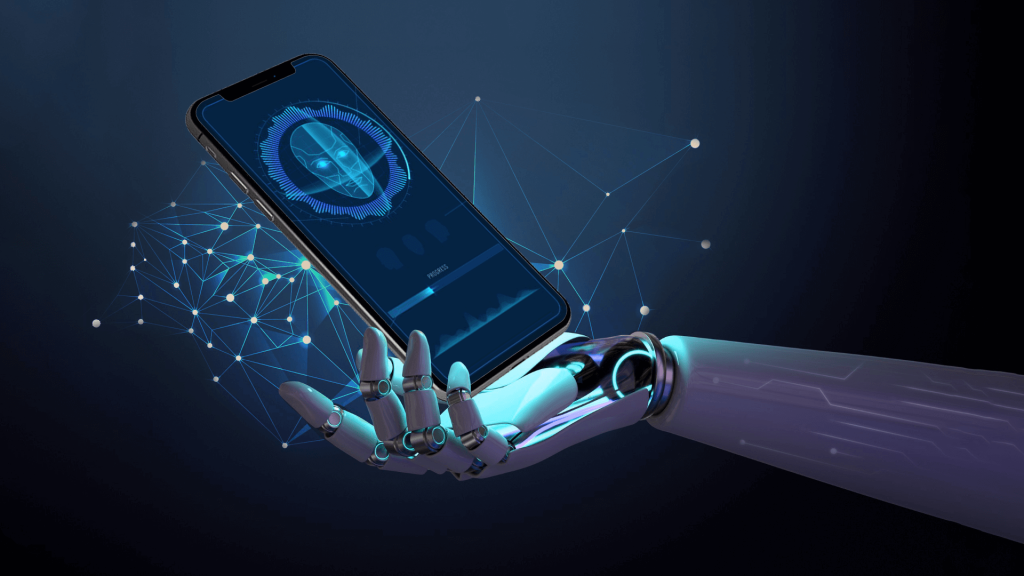
Smartphones have become one of the most important technologies in modern life. People use smartphones for communication, education, entertainment, photography, shopping, banking, work, navigation, and countless other activities. Over the past decade, smartphones have evolved from simple communication devices into powerful pocket-sized computers. Now, the smartphone industry is entering another major stage of development: the rise of AI-powered smartphones.
Artificial intelligence is changing the way smartphones work and how people interact with their devices. Traditional smartphones mainly depended on applications and user commands. AI-powered smartphones can understand patterns, recognize images and voices, process information, make useful suggestions, and perform certain tasks with less direct input from users.
The combination of artificial intelligence and mobile technology is creating a new generation of smart devices. AI can improve smartphone cameras, battery management, voice assistants, search, translation, security, personalization, productivity, and accessibility. As mobile processors become more capable and specialized AI hardware becomes increasingly common, smartphones are becoming better at running artificial intelligence directly on the device.
The rise of AI-powered smartphones is not simply about adding an AI application to an existing phone. It represents a broader change in smartphone design and functionality. Artificial intelligence is becoming part of the operating system, processor, camera system, applications, and user experience.
This article explores the rise of AI-powered smartphones, how they work, their major features, benefits, challenges, future possibilities, and the ways artificial intelligence may transform the smartphone industry.
What Are AI-Powered Smartphones?
AI-powered smartphones are mobile devices that use artificial intelligence and machine learning technologies to provide smarter features and improve the overall user experience.
A traditional smartphone performs many tasks according to predefined instructions. An AI-powered smartphone can use algorithms and models to analyze information, recognize patterns, understand language, and adapt certain functions according to user behavior.
For example, an AI-powered smartphone may automatically improve a photograph by identifying the subject and adjusting image processing. It may summarize a long message, translate speech, recognize objects, organize information, or suggest useful actions.
AI features can operate through cloud-based services, directly on the smartphone, or through a combination of both approaches.
Modern AI smartphones often include specialized hardware such as neural processing units or other AI accelerators. These components are designed to perform artificial intelligence calculations efficiently without placing excessive demand on the main processor.
As a result, artificial intelligence is becoming a fundamental part of modern smartphone technology.
The Evolution of Smartphones
To understand the importance of AI-powered smartphones, it is useful to look at how smartphones have evolved.
Early mobile phones were primarily designed for voice calls and text messages. Later generations introduced internet access, cameras, music players, GPS, applications, and touchscreens.
The introduction of smartphones transformed mobile devices into multipurpose computing platforms. Users could install applications for almost every aspect of daily life.
The next major development involved faster processors, improved cameras, high-resolution displays, cloud computing, and mobile connectivity.
Now artificial intelligence is becoming another major stage in smartphone evolution.
Instead of simply providing more processing power, manufacturers are focusing on making smartphones more intelligent. The goal is to create devices that can understand context and assist users more effectively.
This transition from powerful smartphones to intelligent smartphones could become one of the most important changes in mobile technology.
Why AI Is Becoming Important in Smartphones
Artificial intelligence is becoming important because smartphones generate and process enormous amounts of information.
Every day, smartphones handle photographs, videos, messages, voice commands, locations, documents, notifications, applications, and other forms of data.
AI can help process this information and turn it into useful actions.
For example, artificial intelligence can identify objects in photographs, recognize speech, predict text, detect unusual behavior, optimize battery consumption, and recommend actions.
The increasing power of smartphone processors also makes it possible to perform more AI tasks locally.
This means that smartphones are becoming capable of handling increasingly sophisticated artificial intelligence workloads without always depending on remote servers.
How AI Works Inside Modern Smartphones
AI-powered smartphones typically combine several technologies.
Machine Learning
Machine learning allows software to identify patterns in data and improve its performance for specific tasks.
For example, a smartphone keyboard can learn common typing patterns and improve word suggestions.
Neural Networks
Neural networks are computing systems inspired by certain aspects of biological neural systems. They are widely used for tasks such as image recognition, speech processing, and language understanding.
AI Accelerators
Modern smartphone chips increasingly include specialized hardware designed to accelerate AI workloads.
These components can process certain AI tasks more efficiently than a general-purpose processor alone.
Natural Language Processing
Natural language processing allows smartphones to understand human language.
It supports features such as voice assistants, transcription, translation, text summarization, and conversational interfaces.
Computer Vision
Computer vision allows smartphones to analyze visual information.
It can help identify objects, recognize scenes, improve photography, scan documents, and support augmented reality applications.
AI-Powered Smartphone Cameras
One of the most visible applications of artificial intelligence in smartphones is photography.
Modern smartphone cameras use AI and computational photography techniques to improve images.
AI can analyze a scene and identify elements such as people, landscapes, buildings, food, animals, skies, and other objects.
The software can then adjust image processing according to the scene.
Intelligent Image Enhancement
AI can improve brightness, contrast, colors, sharpness, and other aspects of photographs.
Instead of simply capturing an image, the smartphone can analyze the image and apply computational processing to create a more refined result.
Portrait Photography
AI can help separate subjects from backgrounds.
This can improve portrait effects by identifying people and creating a depth-of-field appearance.
Night Photography
Artificial intelligence can also contribute to low-light photography.
A smartphone can combine multiple frames and use computational techniques to reduce noise and improve visible detail.
Object Recognition
AI-powered cameras can recognize objects and provide useful information.
For example, a phone may identify a plant, document, landmark, or other object.
This makes the camera more than a simple image-capturing tool.
Generative AI on Smartphones
Generative AI is becoming an increasingly important part of smartphone technology.
Generative AI systems can create or transform content such as text, images, audio, and other forms of information.
On smartphones, generative AI can support tasks such as:
- Writing assistance
- Text summarization
- Image editing
- Background removal
- Translation
- Note organization
- Creative writing
- Voice transcription
- Search assistance
- Content generation
The integration of generative AI into smartphones can reduce the need to switch between multiple applications.
Instead of manually completing every step, users may increasingly describe what they want and allow AI-powered tools to assist with the process.
AI Voice Assistants
Voice assistants have existed on smartphones for years, but AI is making them more capable.
Earlier voice assistants were primarily designed around predefined commands.
Modern AI systems can understand more natural language and conversational requests.
Users may be able to ask questions, request summaries, organize information, or perform actions using everyday language.
The future of voice assistants could involve greater contextual understanding.
For example, instead of treating every request as an isolated command, an AI assistant may understand the conversation and relevant information from previous requests.
This could make smartphone interactions more natural.
AI and Smartphone Personalization
Personalization is another important application of artificial intelligence.
Smartphones can contain many settings, applications, notifications, and forms of information.
AI can help organize these features according to individual usage patterns.
For example, AI may learn which applications are frequently used at particular times or which notifications are more important.
Personalization could make smartphones less overwhelming by presenting relevant information at the right time.
However, personalization also creates important privacy considerations because AI systems may need access to certain forms of user data to provide personalized experiences.
AI-Powered Translation
Language translation is another area where AI can significantly improve smartphones.
Modern AI models can process text and speech in multiple languages.
A smartphone may be able to translate conversations, messages, websites, or documents.
Real-time translation could make communication between people who speak different languages easier.
AI-powered translation may also become increasingly useful for travelers, students, businesses, and international communication.
AI and Smartphone Search
Traditional smartphone search requires users to enter specific keywords.
AI-powered search can make searching more conversational.
Instead of entering several keywords, users may describe what they are looking for in natural language.
AI can interpret the meaning of the request and provide a more relevant answer.
This could change the relationship between users and search engines.
Smartphones may increasingly become interfaces for asking questions rather than simply tools for browsing lists of links.
AI-Powered Productivity
AI can turn smartphones into more powerful productivity tools.
Students, professionals, entrepreneurs, and everyday users can benefit from AI-powered features that help organize information.
Potential applications include:
- Summarizing documents
- Creating meeting notes
- Generating outlines
- Improving writing
- Organizing tasks
- Managing schedules
- Transcribing audio
- Searching documents
- Creating reminders
- Extracting important information
These capabilities can save time and make mobile productivity more efficient.
AI and Mobile Gaming
Artificial intelligence is also affecting mobile gaming.
AI can improve graphics optimization, game performance, non-player character behavior, matchmaking systems, and personalized experiences.
Smartphones can use AI to manage resources while gaming.
For example, AI-based systems may help balance performance and power consumption.
As mobile processors become more powerful, AI could contribute to increasingly sophisticated gaming experiences.
AI for Battery Management
Battery life has always been an important concern for smartphone users.
Artificial intelligence can help optimize battery usage by learning how users interact with applications.
A smartphone can identify applications that are rarely used and reduce unnecessary background activity.
AI can also help predict when certain applications are likely to be needed.
Better resource management can potentially improve battery efficiency without requiring a larger battery.
AI and Smartphone Security
Security is another major area where artificial intelligence can be useful.
AI systems can identify unusual patterns and detect potentially suspicious behavior.
Smartphones already use technologies such as biometric authentication, including facial recognition and fingerprint recognition.
AI can help improve these systems by analyzing biometric information and distinguishing authorized users from unauthorized attempts.
AI-based security can also help identify suspicious applications or unusual system behavior.
However, security systems must be carefully designed because incorrect decisions can create usability and privacy problems.
AI and Accessibility
AI-powered smartphones could make technology more accessible to people with different needs.
Speech recognition can help users interact with devices through voice.
Text-to-speech technology can read information aloud.
Computer vision can describe visual information.
Automatic captions can make audio and video content more accessible.
AI translation can also reduce language barriers.
These technologies demonstrate that artificial intelligence is not only about convenience. It can also help more people interact with digital technology.
On-Device AI vs Cloud AI
One of the most important developments in AI-powered smartphones is the ability to process AI tasks directly on the device.
On-Device AI
On-device AI means that an AI task is processed locally on the smartphone.
Advantages can include:
- Faster response times
- Reduced dependence on internet connectivity
- Greater control over data
- Lower network usage
- Potentially improved privacy
Cloud-Based AI
Cloud-based AI processes information on remote servers.
Cloud systems can provide access to extremely powerful computing resources and large AI models.
However, cloud processing generally requires an internet connection and involves sending information to remote infrastructure.
Hybrid AI
Many modern systems use a combination of both approaches.
Simple or privacy-sensitive tasks may be processed locally, while more demanding tasks may be handled in the cloud.
This hybrid model could become increasingly common.
The Importance of AI Chips
AI-powered smartphones require hardware capable of handling artificial intelligence workloads efficiently.
For this reason, smartphone processors are increasingly designed with specialized AI capabilities.
AI accelerators can perform certain calculations much more efficiently than general-purpose processing units.
This allows smartphones to run AI applications while attempting to maintain reasonable power consumption.
As AI becomes more important, the AI processing capabilities of a smartphone may become as important as traditional CPU and GPU performance.
AI and Smartphone Operating Systems
Artificial intelligence is increasingly becoming part of smartphone operating systems.
Rather than keeping AI limited to individual applications, manufacturers can integrate intelligent capabilities throughout the system.
This could allow AI to interact with notifications, messages, photos, documents, settings, and applications.
The result could be a smartphone that feels more like an intelligent assistant than a collection of separate applications.
AI and the Future of Mobile Applications
Artificial intelligence may change how applications are designed.
Traditional applications generally require users to navigate menus and select specific features.
AI-powered applications can provide natural-language interfaces.
Instead of searching through menus, a user may simply explain the desired outcome.
For example, an AI-powered productivity application could organize information from multiple sources and present it in a useful format.
This could make applications simpler for users while increasing the importance of AI models and intelligent interfaces.
AI-Powered Smartphones and Education
AI smartphones can also support education.
Students can use AI-powered tools for explanations, language learning, summarization, organization, and research assistance.
A smartphone can become a portable learning assistant.
For example, AI can explain complex concepts in simpler language or help organize study materials.
However, students should use AI as a learning support tool rather than relying on it to complete academic work without understanding the subject.
The educational value of AI depends heavily on how responsibly it is used.
AI in Healthcare Through Smartphones
Smartphones are increasingly connected to health and wellness technologies.
AI can help analyze information collected through sensors and applications.
Potential applications include activity tracking, sleep analysis, health reminders, and interpretation of certain data.
However, health-related AI requires careful testing, privacy protection, and professional oversight.
Smartphones should not be treated as replacements for qualified medical professionals.
AI and Smart Photography Editing
AI is changing photo editing by making advanced editing tools easier to use.
Traditional photo editing often requires knowledge of specialized software.
AI-powered tools can automate many editing processes.
Users may be able to remove unwanted elements, adjust backgrounds, improve lighting, or make other changes through simple instructions.
This could make advanced creative tools accessible to a much larger audience.
AI and Video Creation
AI is also becoming increasingly relevant to smartphone video.
Future smartphone systems may automatically identify important moments, improve audio, stabilize footage, create summaries, and assist with editing.
Generative AI could eventually help users transform simple recordings into more polished content.
This could be particularly useful for social media creators, students, small businesses, and everyday users.
Benefits of AI-Powered Smartphones
The rise of AI-powered smartphones offers several potential benefits.
Better User Experience
AI can automate repetitive tasks and make smartphone interactions more intuitive.
Improved Productivity
AI tools can help users summarize, organize, write, translate, and search information.
Better Photography
Computational photography can improve image quality and editing capabilities.
Greater Accessibility
AI can provide voice, vision, translation, and other accessibility features.
Personalization
AI can adapt certain smartphone functions to user behavior.
Faster Processing
On-device AI can provide quick responses for supported tasks.
Potential Privacy Improvements
When sensitive processing happens locally, data may not need to leave the device.
Challenges of AI-Powered Smartphones
Despite their advantages, AI-powered smartphones also create challenges.
Privacy Concerns
AI systems may require access to personal information to provide personalized services.
Users need clear controls over how their information is collected and processed.
Security Risks
AI systems can introduce new security challenges.
Attackers may attempt to manipulate AI systems or exploit vulnerabilities in AI-powered applications.
Accuracy Problems
AI is not always correct.
AI-generated information can sometimes be inaccurate or misleading.
Users should verify important information rather than automatically trusting AI outputs.
Battery Consumption
Although specialized AI hardware can improve efficiency, advanced AI processing can still consume significant resources.
Cost
AI-powered smartphone technologies can increase hardware and development costs.
Premium AI features may initially appear mostly in higher-end devices.
Digital Dependence
As smartphones become more capable, people may become increasingly dependent on them for everyday tasks.
Maintaining healthy technology habits remains important.
Privacy and AI Smartphones
Privacy is one of the biggest issues surrounding AI-powered mobile technology.
AI systems may process messages, photographs, voice recordings, documents, locations, and other information.
Users need to understand what information is processed locally and what may be sent to cloud services.
Manufacturers should provide transparent privacy policies and meaningful controls.
Strong encryption, secure processing, and clear permission systems can help protect users.
The future success of AI smartphones will depend not only on their capabilities but also on users’ trust.
AI Hallucinations and Accuracy
Generative AI systems can sometimes produce information that sounds convincing but is incorrect.
This is often called an AI hallucination.
The problem is particularly important on smartphones because users may use AI for search, education, communication, or decision-making.
AI-powered smartphone systems should clearly communicate uncertainty and encourage verification when necessary.
Users should also develop the habit of checking important information against reliable sources.
The Role of Smartphone Manufacturers
Major smartphone manufacturers are investing heavily in artificial intelligence.
They are developing specialized chips, operating system features, AI applications, camera technologies, assistants, and cloud services.
Competition is increasingly moving beyond traditional specifications.
In the past, smartphone competition focused heavily on:
- Processor speed
- Camera megapixels
- Display quality
- Battery capacity
- Storage
AI is now becoming another major area of competition.
Companies are increasingly trying to demonstrate how their devices can understand users and perform useful tasks.
AI Smartphones and the Mobile Industry
The smartphone industry is entering a period where software intelligence may become as important as hardware specifications.
A smartphone with a slightly faster processor may not necessarily provide the most meaningful improvement to everyday users.
Instead, users may care more about whether the device can save time, improve photographs, organize information, translate conversations, or provide useful assistance.
This means AI could change how smartphones are marketed and evaluated.
The Future of AI-Powered Smartphones
The future of AI-powered smartphones is likely to involve deeper integration between hardware, software, applications, and cloud services.
AI assistants may become more capable of understanding context.
Cameras may become increasingly intelligent.
Translation may become more natural and immediate.
Smartphones may automatically organize information according to user needs.
AI may also become more capable of completing multi-step tasks.
For example, instead of simply answering a question, an AI system could potentially understand a goal and coordinate several actions across applications.
More Personalized AI Assistants
Future AI assistants may become highly personalized.
They could understand preferences, schedules, frequently used applications, and communication patterns.
However, this level of personalization would require strong privacy protections.
Users should have control over what information an AI assistant can access.
Smaller and More Efficient AI Models
AI models are becoming increasingly optimized for mobile devices.
Instead of requiring extremely large models for every task, developers can create smaller models that perform specific functions efficiently.
This can make on-device AI faster and more practical.
Future smartphones may contain several specialized AI models designed for different tasks.
AI and Future Smartphone Design
Artificial intelligence could also influence physical smartphone design.
As AI becomes more efficient, manufacturers may focus on specialized hardware for local intelligence.
Future smartphones could include more advanced sensors and AI processors.
The smartphone may gradually become less dependent on traditional application interfaces.
Instead, users could interact with the device through voice, images, gestures, and natural-language instructions.
AI and Augmented Reality
AI and augmented reality could become increasingly connected.
AI can help smartphones understand the physical environment through cameras and sensors.
This could support applications such as navigation, education, shopping, gaming, and visual assistance.
For example, a smartphone could identify objects in the environment and provide contextual information.
The combination of AI and augmented reality could make smartphones more aware of their surroundings.
AI-Powered Smartphones for Businesses
Businesses can benefit from AI-powered smartphones in many ways.
Employees can use AI tools for communication, document management, scheduling, research, translation, and productivity.
Sales teams can access information quickly.
Small businesses can use AI to create marketing content and analyze customer information.
Remote workers can use AI-powered transcription and meeting tools.
As AI capabilities improve, smartphones could become increasingly useful business devices.
AI and Content Creation
Content creators are another major group that can benefit from AI-powered smartphones.
Modern smartphones already provide powerful cameras and video capabilities.
AI can add automated editing, transcription, captioning, image enhancement, and creative assistance.
This can reduce the time required to produce content.
For creators, the smartphone could become an increasingly complete mobile production studio.
The Environmental Impact of AI Smartphones
AI-powered smartphones also raise environmental questions.
Manufacturing advanced processors requires energy and resources.
Data centers that support cloud AI also consume significant amounts of electricity.
At the same time, better software and longer device lifespans could reduce electronic waste.
If AI helps smartphones remain useful for longer periods, users may not need to replace devices as frequently.
Sustainable design, repairability, recycling, and energy efficiency will remain important considerations.
The Importance of Responsible AI
As artificial intelligence becomes more integrated into smartphones, responsible development becomes increasingly important.
AI systems should be designed with privacy, security, fairness, transparency, and accuracy in mind.
Users should understand what AI can and cannot do.
Manufacturers should provide clear controls and explain how personal information is processed.
Responsible AI will be essential for building long-term trust.
How AI Will Change the Way We Use Smartphones
The biggest change may be the way people interact with their devices.
Traditional smartphone use often involves opening an application, searching through menus, entering information, and manually completing a task.
AI can reduce some of these steps.
Users may increasingly communicate their goals in natural language.
Instead of asking, “Which application should I open?” they may simply tell their smartphone what they want to accomplish.
This could make smartphones easier and more intuitive.
Are AI-Powered Smartphones the Future?
The growth of AI features suggests that artificial intelligence will become a fundamental part of smartphone technology.
AI is already influencing cameras, assistants, translation, search, productivity, security, accessibility, and personalization.
As hardware improves and AI models become more efficient, these capabilities are likely to expand.
The future smartphone may not simply be a device that runs applications. It may become an intelligent computing assistant that understands information and helps users accomplish tasks.
Conclusion
The rise of AI-powered smartphones represents a major transformation in mobile technology.
Artificial intelligence is moving beyond individual applications and becoming integrated into smartphone hardware, operating systems, cameras, assistants, search tools, productivity systems, and security features.
AI-powered smartphones can provide smarter photography, better personalization, improved productivity, real-time translation, enhanced accessibility, intelligent search, and more natural interactions.
At the same time, challenges such as privacy, security, accuracy, cost, energy consumption, and responsible AI development must be addressed.
The future of smartphones will likely depend not only on faster processors and better cameras but also on how intelligently devices can understand and assist their users.
As artificial intelligence continues to develop, smartphones are expected to become increasingly capable, personalized, and context-aware. The transition from smartphones to AI-powered intelligent devices may become one of the most important developments in consumer technology.
For consumers, the most valuable AI smartphone will not necessarily be the one with the largest number of AI features. Instead, it will be the device that uses artificial intelligence responsibly to solve real problems, save time, protect privacy, and make everyday digital experiences easier.
The rise of AI-powered smartphones is therefore more than a technological trend. It represents a new direction for mobile computing and could fundamentally change how people communicate, work, learn, create, and interact with technology.