Introduction
Customer service has always been an important part of running a successful business. Customers want quick answers, helpful information, easy communication, and solutions to their problems. In the past, businesses mainly depended on phone calls, emails, and in-person support to communicate with customers. Although these methods are still useful, modern technology has introduced a faster and more flexible solution: chatbots.
Chatbots are software applications designed to communicate with people through text or voice. They can answer questions, provide information, guide customers through processes, collect basic details, and in some cases help solve problems without human intervention. With advances in artificial intelligence, machine learning, natural language processing, and automation, modern chatbots have become much more capable than the simple automated systems of the past.
Today, chatbots are changing customer service technology across industries. Online stores, banks, travel companies, healthcare organizations, educational institutions, software companies, telecommunications providers, and many other businesses use chatbots to communicate with customers.
One of the biggest reasons for the growing popularity of chatbots is the demand for immediate customer support. People are used to receiving information quickly through smartphones and the internet. Waiting several hours or days for a response can lead to frustration. Chatbots can provide immediate assistance at any time of the day, helping businesses improve customer experiences while reducing pressure on human support teams.
This article explores how chatbots are changing customer service technology, their major benefits, practical applications, challenges, future trends, and the role of artificial intelligence in modern customer support.
What Is a Chatbot?
A chatbot is a computer program that communicates with users through a conversational interface. The communication may happen through a website, mobile application, messaging platform, social media service, or voice assistant.
Basic chatbots follow predefined rules. For example, if a customer types “What are your business hours?” the chatbot may recognize certain keywords and provide a prepared answer.
Modern AI-powered chatbots are more advanced. They can understand natural language, identify the purpose of a customer’s question, use information from databases, and generate more natural responses.
There are generally two major categories of chatbots:
Rule-Based Chatbots
Rule-based chatbots operate according to predefined instructions. They may use menus, buttons, keywords, and decision trees to guide customers.
For example:
Customer: “I want to track my order.”
Chatbot: “Please select your order number.”
The chatbot then follows a predefined process.
These systems can be useful for simple and repetitive customer service tasks.
AI-Powered Chatbots
AI-powered chatbots use technologies such as natural language processing and machine learning to understand customer messages more effectively.
Instead of requiring customers to choose from a fixed menu, an AI chatbot may understand different ways of asking the same question.
For example:
- “Where is my package?”
- “Can you check my delivery?”
- “I want to track my order.”
- “Has my order shipped yet?”
An advanced chatbot may understand that all of these messages relate to order tracking.
This flexibility is one of the major reasons AI chatbots are becoming increasingly important in customer service technology.
How Chatbots Are Changing Customer Service
Chatbots are changing customer service in several important ways. They are not simply replacing traditional communication methods. Instead, they are creating new ways for customers and businesses to communicate.
1. Providing 24/7 Customer Support
One of the most important advantages of chatbots is their availability.
Human customer service employees usually work according to shifts and business hours. A chatbot, however, can operate continuously.
Customers may have questions late at night, early in the morning, or during weekends and holidays. A chatbot can provide immediate assistance even when a human representative is unavailable.
For global businesses, 24/7 support can be especially valuable because customers may live in different time zones.
A chatbot can answer common questions at any hour without requiring a support employee to be online.
This creates a more convenient customer experience.
2. Faster Response Times
Speed is extremely important in modern customer service.
Customers often expect quick answers. If someone has a simple question about shipping, pricing, account access, or product availability, they may not want to wait for an email response.
Chatbots can respond almost instantly.
Instead of waiting in a phone queue or email inbox, customers can type their question and receive an immediate response.
Faster responses can improve customer satisfaction and help businesses handle large numbers of inquiries more efficiently.
3. Handling Repetitive Questions
Customer service teams often receive the same questions repeatedly.
For example:
- What are your business hours?
- How can I reset my password?
- Where is my order?
- What is your return policy?
- Do you ship internationally?
- How much does delivery cost?
- How can I contact support?
Human employees can answer these questions, but repeatedly handling the same requests consumes valuable time.
Chatbots can automate many of these repetitive tasks.
This allows customer service employees to focus on more complex situations that require human judgment, empathy, or problem-solving skills.
4. Reducing Customer Service Workload
When chatbots handle simple questions, human agents receive fewer routine inquiries.
This can reduce workload and help support teams manage their time more effectively.
For example, a chatbot can answer basic questions before transferring a complicated issue to a human representative.
Instead of starting every conversation from the beginning, the chatbot may collect relevant information first.
The human agent can then continue the conversation with a better understanding of the customer’s problem.
5. Improving Customer Experience
Customer experience is one of the most important factors in modern business.
Customers generally appreciate support that is:
- Fast
- Convenient
- Easy to access
- Consistent
- Available when needed
Chatbots can provide all of these benefits when they are properly designed.
A well-designed chatbot can guide customers through common tasks without forcing them to search through large websites or wait for assistance.
6. Providing Consistent Information
Human employees may sometimes provide slightly different answers to the same question.
A chatbot can deliver standardized information based on approved business knowledge.
For example, if a company’s return policy is 30 days, the chatbot can consistently communicate that policy.
Consistency can help reduce confusion and improve customer trust.
However, businesses must regularly update chatbot information. An outdated chatbot can provide incorrect information, which may create a poor customer experience.
The Role of Artificial Intelligence in Chatbots
Artificial intelligence has significantly improved chatbot technology.
Traditional chatbots were often limited to predefined commands. Modern AI-powered systems can understand language more naturally and handle more flexible conversations.
Several AI technologies contribute to modern chatbot development.
Natural Language Processing
Natural language processing, often called NLP, helps computers understand human language.
Customers do not always use exact keywords when asking questions. NLP allows chatbots to interpret different expressions and understand the general meaning of a message.
For example, a customer might write:
“I can’t get into my account.”
Another customer might say:
“My login isn’t working.”
An AI chatbot can recognize that both messages may relate to account access.
Machine Learning
Machine learning allows systems to improve their performance by learning from data and feedback.
In customer service, machine learning can help identify common customer questions, improve intent recognition, and support more accurate responses.
Businesses can analyze chatbot conversations to discover areas where customers frequently experience problems.
Generative AI
Generative AI has introduced another major change to chatbot technology.
Instead of selecting only from a fixed list of responses, generative AI systems can create responses based on the context of a conversation.
This can make interactions feel more natural.
However, businesses need appropriate safeguards because generative AI systems can sometimes produce inaccurate or inappropriate information. Customer service chatbots should therefore operate with reliable knowledge sources, clear limitations, monitoring, and escalation procedures.
Chatbots and E-Commerce Customer Service
E-commerce is one of the industries where chatbots have become particularly useful.
Online shoppers often have questions before, during, and after purchasing a product.
A chatbot can help with:
- Product information
- Product recommendations
- Order tracking
- Shipping information
- Returns
- Refunds
- Payment questions
- Account assistance
- Frequently asked questions
For example, a customer visiting an online store may ask, “Do you have this product in another size?”
A chatbot connected to the company’s product database may be able to provide an answer immediately.
After a purchase, the chatbot can help customers track their orders.
This reduces the need for customers to contact human support for routine requests.
Chatbots in Banking and Financial Services
Banks and financial institutions also use conversational technology to support customers.
Chatbots can assist with general questions about:
- Account services
- Branch hours
- Card services
- Payment information
- Transaction explanations
- Application processes
- General financial products
Security is especially important in financial services. Chatbots should not expose sensitive customer information or perform high-risk actions without appropriate authentication and security controls.
The main benefit is that customers can obtain general information quickly without necessarily calling a support center.
Chatbots in Travel and Hospitality
Travel companies, airlines, hotels, and booking platforms can use chatbots to improve customer communication.
Travel customers often need information about:
- Reservations
- Check-in
- Booking changes
- Cancellation policies
- Hotel services
- Travel schedules
- Destination information
A chatbot can provide basic assistance before and after a booking.
For example, a hotel chatbot might answer questions about check-in times, available facilities, or hotel policies.
This can reduce the number of routine calls received by hotel staff.
Chatbots in Healthcare Customer Support
Healthcare organizations can also use chatbots for administrative customer service.
Examples include:
- Appointment scheduling
- Clinic hours
- General service information
- Appointment reminders
- Basic administrative questions
- Navigation of healthcare services
However, healthcare chatbots require additional care because medical information can be sensitive and high-stakes.
A customer service chatbot should clearly distinguish between administrative support and medical diagnosis. Complex health questions should be directed to qualified healthcare professionals.
Chatbots in Education
Schools, universities, online learning platforms, and educational websites can use chatbots to answer common student questions.
For example, students may ask about:
- Course schedules
- Enrollment
- Assignments
- Deadlines
- Campus services
- Technical support
- Account access
An educational chatbot can provide quick answers and direct students toward appropriate resources.
This can reduce repetitive administrative work for staff.
Personalized Customer Service
One major development in chatbot technology is personalization.
Traditional customer service often provides the same general information to everyone. Modern systems can potentially use customer context to provide more relevant assistance, provided that appropriate privacy and security controls are in place.
For example, a chatbot connected to an e-commerce system might recognize that a customer is asking about an existing order and provide relevant order information after authentication.
Personalized support can make interactions more efficient because customers do not have to repeat information unnecessarily.
Chatbots and Omnichannel Customer Support
Modern customers communicate through many channels.
They may contact a business through:
- Website chat
- Mobile applications
- Social media
- Messaging platforms
- Voice systems
Businesses increasingly aim to provide consistent support across these channels.
Chatbot technology can help create an omnichannel customer service experience.
For example, a customer may begin a conversation on a website and later continue through a mobile application.
When systems are properly integrated, customer information can move between channels, reducing the need to repeat the same details.
Human Agents and Chatbots Working Together
A common misunderstanding is that chatbots are designed to completely replace human customer service employees.
In many cases, the more effective approach is collaboration between humans and AI.
Chatbots are particularly useful for:
- Repetitive questions
- Basic information
- Simple processes
- Initial troubleshooting
- Information collection
Human agents are more suitable for:
- Complex complaints
- Emotional situations
- Unusual problems
- Sensitive cases
- Negotiation
- Problems requiring judgment
This creates a hybrid customer service model.
The chatbot handles simple requests while human agents focus on situations where human understanding is more valuable.
Intelligent Chatbot Handoffs
A high-quality customer service chatbot should know when it cannot solve a problem.
Instead of repeatedly giving irrelevant answers, it should provide an easy way to contact a human representative.
For example:
Customer: “I have been charged twice.”
If the chatbot cannot safely investigate the issue, it can collect basic information and transfer the conversation to a human agent.
This type of handoff is essential for customer satisfaction.
Customers should not feel trapped inside an automated system.
Chatbots and Customer Data
Chatbots can generate valuable information about customer needs.
Businesses can analyze conversations to identify:
- Frequently asked questions
- Common complaints
- Product problems
- Website difficulties
- Customer preferences
- Service gaps
For example, if thousands of customers ask the same question about a product, the business may discover that the product description is unclear.
This means chatbot data can help businesses improve not only customer support but also products, websites, and business processes.
Improving Customer Support Efficiency
Efficiency is another major advantage of chatbot technology.
A human agent may only be able to handle one or a small number of conversations at a time.
A digital chatbot can potentially communicate with many customers simultaneously.
During periods of high demand, such as holidays or major sales events, this can be especially useful.
For example, an online retailer may receive thousands of questions during a major shopping event.
A chatbot can handle many basic questions while human employees deal with complex cases.
Reducing Customer Service Costs
Businesses must carefully manage operating costs.
Customer service departments can require significant resources because companies need employees, training, technology, management, and infrastructure.
Chatbots can automate certain tasks and reduce the number of routine interactions handled entirely by human agents.
This does not necessarily mean eliminating customer service employees.
Instead, businesses can use automation to make better use of human resources.
Employees can spend more time solving difficult problems and less time answering repetitive questions.
Chatbots and Employee Productivity
Chatbots can also help customer service employees directly.
An internal AI assistant can help agents find information quickly.
For example, an employee may ask an internal system:
“What is our current return policy for this product category?”
The system can retrieve the relevant information and help the agent respond more quickly.
This type of technology can act as an assistant rather than a replacement.
Multilingual Customer Support
Businesses often serve customers who speak different languages.
AI-powered chatbot technology can potentially support multiple languages and make customer service more accessible.
This is particularly useful for international companies.
A multilingual chatbot can provide basic assistance in a customer’s preferred language, although businesses should ensure that translations are accurate and culturally appropriate.
Chatbots and Voice Technology
Chatbots are not limited to text.
Voice-based conversational AI is also becoming increasingly important.
Customers may interact with automated systems through:
- Smartphones
- Smart speakers
- Call centers
- Vehicle systems
- Voice-enabled applications
Voice technology can make customer service more convenient for people who prefer speaking instead of typing.
As speech recognition and natural language technologies continue improving, voice-based customer support is likely to become more capable.
Chatbots for Technical Support
Technology companies often receive large numbers of technical support questions.
Chatbots can help customers troubleshoot common problems.
For example, a software company might use a chatbot to guide users through:
- Password recovery
- Installation steps
- Basic configuration
- Account settings
- Common error messages
- Frequently asked technical questions
If the problem is complicated, the chatbot can transfer the customer to a technical support specialist.
Chatbots and Self-Service
Modern customers increasingly prefer self-service options.
Instead of calling customer support, many people would rather solve simple problems themselves.
Chatbots can act as a bridge between traditional customer service and self-service.
A chatbot can ask questions, identify the problem, and guide the customer through the necessary steps.
This can make customer service faster and more convenient.
Challenges of Chatbot Technology
Although chatbots provide many advantages, they also have limitations.
Businesses should understand these challenges before implementing chatbot systems.
1. Incorrect Answers
AI-powered systems can sometimes provide inaccurate information.
An incorrect answer can be frustrating, especially when a customer needs important information.
Businesses should use reliable knowledge sources, testing, monitoring, and human oversight.
2. Lack of Human Empathy
Human customer service employees can recognize emotions and respond with empathy.
A chatbot may struggle when a customer is angry, worried, or upset.
This is why human escalation remains important.
3. Privacy Concerns
Customer service conversations may contain personal information.
Businesses must protect customer data and follow applicable privacy requirements.
Customers should know how their information is being used and stored.
4. Security Risks
Chatbots connected to business systems can become security targets.
Organizations need appropriate authentication, access controls, monitoring, and security practices.
5. Poorly Designed Conversations
A chatbot can become frustrating if it repeatedly fails to understand customers.
Good chatbot design requires clear conversation flows, useful answers, and easy access to human support.
6. Implementation Costs
Developing and integrating an advanced chatbot can require significant investment.
Businesses may need to connect the chatbot with customer relationship management systems, databases, websites, mobile apps, and support platforms.
How Businesses Can Build Better Chatbots
Businesses should focus on customer needs rather than simply adopting AI because it is popular.
Define Clear Goals
A company should first identify what it wants the chatbot to accomplish.
For example:
- Reduce repetitive support requests
- Improve response time
- Provide 24/7 basic support
- Help customers track orders
- Improve self-service
Clear goals make chatbot development more effective.
Start With Common Questions
Businesses can analyze existing customer service data to identify frequently asked questions.
These questions are often good starting points for automation.
Make Human Support Easy to Access
Customers should always have an appropriate way to reach a human representative when necessary.
Keep Information Updated
A chatbot is only useful if its information is accurate.
Companies should regularly review and update chatbot knowledge.
Test the System
Before launching a chatbot, businesses should test it with many realistic customer questions.
Testing can identify:
- Confusing responses
- Missing information
- Incorrect answers
- Poor conversation flows
- Failed handoffs
The Importance of Chatbot Design
Technology alone does not guarantee a good customer experience.
The chatbot’s conversation design is equally important.
A good chatbot should:
- Use simple language
- Give clear answers
- Avoid unnecessary questions
- Explain what it can do
- Admit when it cannot help
- Provide human support when appropriate
The goal should be to make customer service easier, not more complicated.
Chatbots and Customer Satisfaction
Customer satisfaction depends on several factors, including speed, accuracy, convenience, and communication quality.
Chatbots can improve satisfaction when they solve problems efficiently.
However, automation can also reduce satisfaction if customers cannot reach a human when they need one.
Therefore, the success of a chatbot should not be measured only by how many conversations it handles.
Businesses should also measure:
- Customer satisfaction
- Resolution rate
- Response time
- Escalation rate
- Repeat contacts
- Customer feedback
Measuring Chatbot Performance
Businesses can use several metrics to evaluate chatbot performance.
Resolution Rate
This measures how many customer issues are successfully resolved.
Response Time
Chatbots generally provide very fast responses, but businesses should evaluate whether those responses are useful.
Escalation Rate
This shows how often conversations need to be transferred to human agents.
A high escalation rate may indicate that the chatbot needs improvement.
Customer Satisfaction
Customer feedback can reveal whether customers actually enjoy using the chatbot.
Conversation Completion Rate
This measures how many users complete the intended task successfully.
The Future of Chatbots in Customer Service
The future of customer service technology is likely to involve deeper integration between artificial intelligence, automation, customer data, and human support.
Future chatbots may become better at understanding context, remembering conversation history within appropriate privacy boundaries, and assisting with increasingly complex customer requests.
AI agents may also become more capable of completing multi-step tasks rather than simply answering questions.
For example, a future customer service system might understand a customer’s request, verify relevant information, check available options, complete an approved process, and provide confirmation.
However, human oversight will remain important, particularly for sensitive or high-impact decisions.
Generative AI and the Next Generation of Chatbots
Generative AI is likely to remain an important technology in the development of advanced customer service systems.
Traditional chatbots often depend on predefined answers.
Generative AI can create responses dynamically based on the conversation and available information.
This can make conversations more flexible and natural.
Businesses will need strong controls to ensure that generated answers are accurate, relevant, safe, and aligned with company policies.
AI Agents and Automated Customer Service
A growing development is the concept of AI agents.
Unlike simple chatbots that mainly answer questions, AI agents may be designed to perform tasks using connected tools and systems.
For example, an AI agent could potentially:
- Understand a customer request.
- Identify the appropriate business process.
- Retrieve relevant information.
- Perform an authorized action.
- Confirm the result with the customer.
This could significantly change customer service technology.
However, businesses must establish clear permissions and safeguards before allowing AI systems to perform actions on behalf of customers.
The Future Relationship Between Humans and AI
The future of customer service is unlikely to be purely human or purely automated.
Instead, businesses will probably combine the strengths of both.
AI is good at:
- Speed
- Automation
- Pattern recognition
- Handling large volumes of routine requests
- Providing consistent information
Humans are good at:
- Empathy
- Judgment
- Complex problem-solving
- Negotiation
- Understanding unusual situations
Combining these strengths can create a more effective customer service system.
Benefits of Chatbots for Small Businesses
Chatbots are not only useful for large corporations.
Small businesses can also benefit from chatbot technology.
A small online store may not have enough employees to provide 24-hour customer support.
A chatbot can answer common questions outside normal business hours.
It can also help small businesses manage customer inquiries without requiring a large support team.
As chatbot technology becomes easier to implement, more small businesses may adopt it.
Chatbots and Digital Transformation
Digital transformation involves using modern technology to improve business operations and customer experiences.
Chatbots are an important part of this transformation.
They connect customer communication with automation, data, artificial intelligence, and digital platforms.
Businesses adopting chatbots are not simply adding a chat window to their websites. In many cases, they are redesigning how customer support operates.
Chatbots and Competitive Advantage
Customer service can be a major competitive advantage.
Two companies may offer similar products, but customers may prefer the company that provides faster and easier support.
Chatbots can help businesses provide convenient communication while maintaining human support for complex situations.
A well-designed chatbot can therefore contribute to a stronger overall customer experience.
Common Mistakes Businesses Should Avoid
Companies should avoid several common chatbot mistakes.
Trying to Automate Everything
Not every customer service problem should be automated.
Complex and sensitive situations may require humans.
Hiding Human Support
Customers should not have to fight through multiple chatbot menus to reach a representative.
Using Outdated Information
Incorrect information can damage customer trust.
Making Conversations Too Complicated
Simple questions should receive simple answers.
Ignoring Customer Feedback
Customer feedback is essential for improving chatbot performance.
Ethical Considerations
Businesses should also consider the ethical side of chatbot technology.
Customers should understand when they are communicating with an automated system.
Transparency can help build trust.
Businesses should also consider privacy, data security, accessibility, fairness, and responsible AI practices.
The goal should be to use technology to improve customer service rather than simply reduce human involvement.
Accessibility and Inclusive Customer Service
Chatbots can potentially make customer service more accessible.
For example, text-based support may be easier for some users than phone calls.
Voice interfaces may help users who prefer speaking.
Multilingual capabilities can also help customers communicate in different languages.
Businesses should test chatbot experiences with diverse users to ensure that the system is genuinely accessible.
Chatbots as a Long-Term Customer Service Strategy
Chatbots should not be viewed as a temporary technology trend.
As AI and automation continue developing, conversational systems are likely to become a standard part of digital customer service.
However, successful businesses will focus on using chatbots strategically.
The best chatbot is not necessarily the most advanced chatbot.
The best chatbot is one that solves real customer problems efficiently and knows when a human should take over.
Conclusion
Chatbots are changing customer service technology by making communication faster, more accessible, automated, and scalable. From answering frequently asked questions to helping customers track orders, schedule appointments, troubleshoot problems, and access information, chatbots can perform many valuable customer service tasks.
Artificial intelligence, natural language processing, machine learning, and generative AI are making chatbots increasingly capable of understanding natural conversations. These technologies allow businesses to provide support around the clock while reducing repetitive workloads for human employees.
However, chatbots also have important limitations. They can provide incorrect information, struggle with emotional situations, create privacy concerns, and frustrate customers when human support is difficult to reach. For these reasons, businesses should treat chatbots as tools that work alongside human employees rather than automatically replacing them.
The future of customer service is likely to combine AI-powered chatbots, intelligent automation, human expertise, customer data, and personalized digital experiences. Businesses that use these technologies responsibly can improve response times, reduce repetitive work, and create more convenient customer experiences.
Ultimately, the success of chatbot technology will depend not only on how intelligent the technology becomes but also on how effectively businesses use it to understand and serve their customers. When implemented thoughtfully, chatbots can become an important part of modern customer service and a powerful technology for the future of business communication.
Frequently Asked Questions About Chatbots and Customer Service
What is a chatbot in customer service?
A chatbot is a software system that communicates with customers through text or voice. It can answer common questions, provide information, guide users through processes, and transfer complex issues to human representatives.
How are chatbots changing customer service?
Chatbots are changing customer service by providing faster responses, 24/7 availability, automated assistance, personalized interactions, and support for large numbers of customers.
Can chatbots replace human customer service agents?
Chatbots can automate many routine tasks, but they are not suitable for every situation. Human agents remain important for complex, sensitive, emotional, and unusual customer problems.
Are AI chatbots better than traditional chatbots?
AI-powered chatbots can understand natural language more flexibly than many traditional rule-based systems. However, their effectiveness depends on the quality of their data, design, integration, and monitoring.
What industries use chatbots?
Chatbots are used in e-commerce, banking, travel, hospitality, education, healthcare administration, telecommunications, technology, retail, and many other industries.
Are chatbots available 24/7?
Yes. One of the major advantages of chatbots is that they can operate continuously, allowing customers to receive automated assistance outside normal business hours.
How do chatbots improve customer experience?
They can provide quick answers, reduce waiting times, simplify self-service, and help customers access information without always contacting a human representative.
What are the disadvantages of chatbots?
Common disadvantages include inaccurate responses, limited emotional understanding, privacy concerns, security risks, implementation costs, and customer frustration when human support is unavailable.
What is the future of chatbot technology?
The future of chatbot technology is likely to include more advanced AI, generative AI, AI agents, voice interaction, personalization, automation, and closer collaboration between artificial intelligence and human customer service teams.
SEO Keywords
Primary Keyword:
How Chatbots Are Changing Customer Service
Secondary Keywords:
- chatbots in customer service
- customer service technology
- AI chatbots
- artificial intelligence in customer service
- chatbot technology
- benefits of chatbots
- customer support automation
- AI customer service
- future of chatbots
- chatbots for businesses
- automated customer support
- conversational AI
- chatbot customer experience
- AI-powered customer service
- chatbot benefits for businesses
Suggested SEO Title
How Chatbots Are Changing Customer Service Technology
Suggested Meta Description
Discover how chatbots are changing customer service technology through AI, automation, 24/7 support, faster responses, personalization, and improved customer experiences.
Suggested URL Slug
/how-chatbots-are-changing-customer-service/
Suggested Image Alt Text
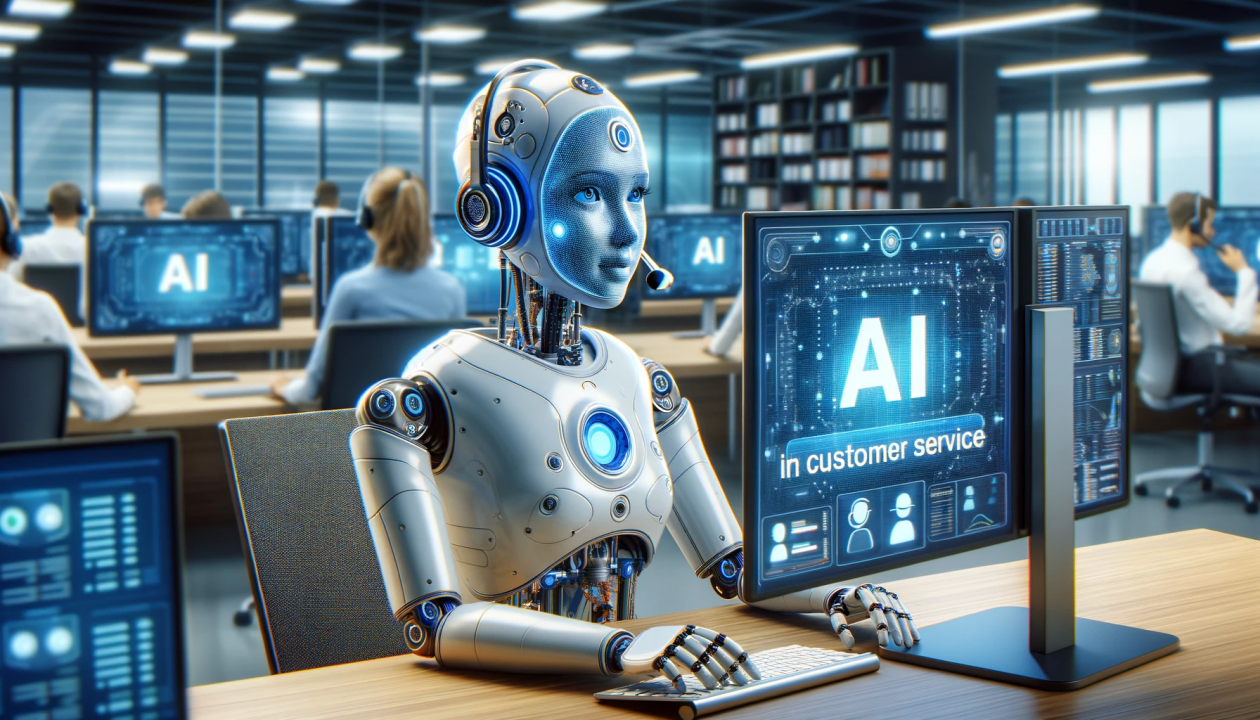
AI chatbot helping customers with modern customer service technology
Suggested H1
How Chatbots Are Changing Customer Service Technology